
Importance of different gait training in neuro rehab
Blog post description.
8/3/20253 min read
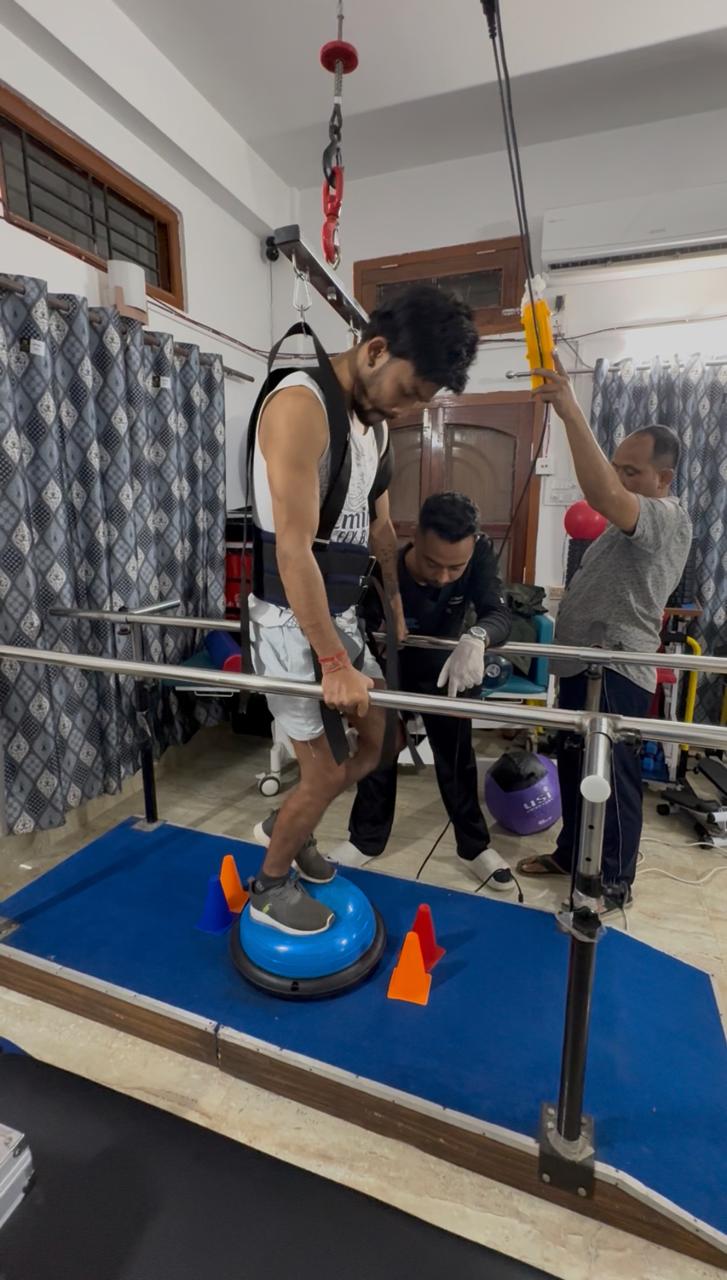
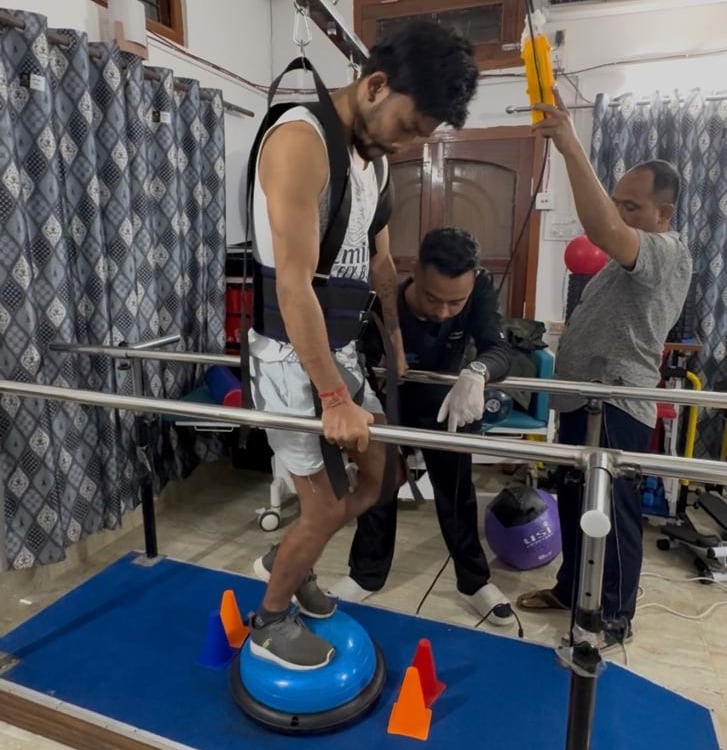
Gait training is the cornerstone of neuro rehabilitation, transforming lives by systematically rebuilding the ability to walk, maintain movement, and reclaim independence after devastating neurological events like stroke, paralysis, and spinal cord injury. For patients who wake up unable to take a single step, gait training isn't just exercise—it's the pathway back to dignity, work, family, and a life beyond the bed. In regions like Assam, where stroke affects 64,000 people yearly and road accidents cause thousands of spinal cord injuries, mastering gait means the difference between isolation and freedom.
Why Gait Training Matters: Beyond Just "Walking"
Gait refers to the coordinated pattern of movement required for walking—hip flexion, knee stability, ankle control, balance shifts, and arm swing. After stroke paralysis or spinal cord injury, this complex neuromuscular symphony breaks down. A stroke survivor might drag one leg; a spinal cord injury patient could have no leg sensation. Without targeted gait training, patients remain wheelchair-bound, their muscles atrophy, joints stiffen, and mental health deteriorates.
The importance of gait training lies in its holistic impact:
Physical recovery: Retrains weakened muscles, prevents contractures, improves cardiovascular health.
Neurological rewiring: Stimulates neuroplasticity, helping the brain form new pathways for movement.
Psychological boost: Each step forward combats depression, rebuilds self-efficacy.
Independence recovery: Enables return to work, community, daily tasks—restoring roles as parent, professional, provider.
Studies show patients undergoing intensive gait training post-stroke regain ambulatory status 30-50% faster than standard physio alone. For spinal cord injury, consistent training correlates with higher independence scores.
The Science of Gait Training: How It Restores Movement
Gait training leverages neuroplasticity—the brain's ability to reorganize after injury. Post-stroke paralysis, undamaged brain areas can "take over" walking functions through repetitive, task-specific practice. Similarly, incomplete spinal cord injury patients benefit from retraining spinal reflexes below the injury level.
Key gait training techniques include:
Bodyweight-supported treadmill training (BWSTT): Harnesses reduce weight load, allowing safe stepping practice. Patients focus on movement patterns without fall fear.
Functional electrical stimulation (FES): Electrodes activate paralyzed muscles in walking sequence, mimicking natural gait.
Overground walking with cues: Therapists guide heel-toe roll, arm swing using rhythmic auditory cues (metronomes).
Robotic gait orthoses (e.g., Lokomat): Machines enforce physiological gait, providing thousands of step repetitions daily.
Balance integration: Computer-aided platforms track center-of-mass, training postural control during walking.
For spinal cord injury, gait training emphasizes reciprocal arm-leg patterns and core stability. Post-stroke, it targets hemiplegic swing asymmetry. Progress is measured by tools like the 10-Meter Walk Test and Functional Ambulation Categories.
Real Impact: Stories of Independence Recovery
Consider Rajesh, a 45-year-old Assam truck driver with T12 spinal cord injury from a highway crash. Bed-bound for 3 months, he feared lifelong dependence. Through 12 weeks of gait training—BWSTT progressing to crutches—he now walks 200m independently, returned to light work, and coaches his son’s football team.
Or Sunita, a stroke survivor with right-sided paralysis. Her family hid her condition as "shame." After robotic gait training and FES, she walks without a stick, cooks for her children, and attends temple—reclaiming her role as mother.
These aren't outliers. Gait training boosts independence recovery by 40-60% in moderate cases, per neuro-rehab meta-analyses.
Challenges in India & Assam: Why Gait Training is Urgently Needed
Stroke paralysis and spinal cord injury burden Assam heavily—64,000 strokes annually, thousands from road accidents (35% involve neurotrauma). Yet access to proper gait training is abysmal:
Rural patients travel 100+ km for basic physio.
No robotic/BWSTT facilities outside Guwahati.
Cultural taboo around disability delays rehab start.
Families lack funds for prolonged therapy.
Without gait training, movement loss becomes permanent. Joint deformities set in by 6 months; depression hits 70% of patients. Independence recovery drops below 20%.
Building a Comprehensive Gait Training Program
Effective programs follow this progression:
Acute phase (0-4 weeks): Bedside ROM, tilt-table standing.
Subacute (4-12 weeks): BWSTT, FES, parallel bars.
Community reintegration (12+ weeks): Uneven surfaces, stairs, obstacle courses.
Success factors:
High repetition: 300-500 steps/session.
Multidisciplinary: Physios, OTs, psychologists.
Tech integration: Robotics, VR gait games.
Family training: Home exercise supervision.
The Future: Technology-Driven Gait Recovery
Emerging tools revolutionize neuro rehab:
Exoskeletons: Ekso GT enables upright walking from Day 1.
VR gait training: Gamified environments boost motivation.
AI motion analysis: Real-time feedback optimizes patterns.
In Assam, centres like NERI integrate these, making walking achievable even for severe cases.
Conclusion: Every Step Counts
Gait training isn't optional—it's essential for independence recovery after stroke paralysis and spinal cord injury. It restores movement, rebuilds lives, and defies the "bed-bound forever" verdict. For Assam's thousands facing neurological trauma yearly, accessible gait training means hope over hopelessness.
If you've suffered stroke, paralysis, or spinal cord injury, start gait training today. Every assisted step lays the foundation for unassisted walking. Neuroplasticity has no expiry date—your brain is ready to relearn.
At Northeast Neuro Rehab, we specialize in comprehensive gait programs. Contact us to take your first step toward independence.
Recover. Rebuild. Relive
We don’t just treat injuries—we empower people to take control of their lives again, to live with dignity and courage.
Contact
Support
+91-9998523083
© 2025. All rights reserved.